
Here are some science questions from the Sixth, Seventh, and Eighth Grade Standards to help you test your knowledge of the Next Generation Sunshine State Standards.
The questions are chosen randomly, so this quest will be different each time you reload the page.
* Click here to see only the most recently added questions.
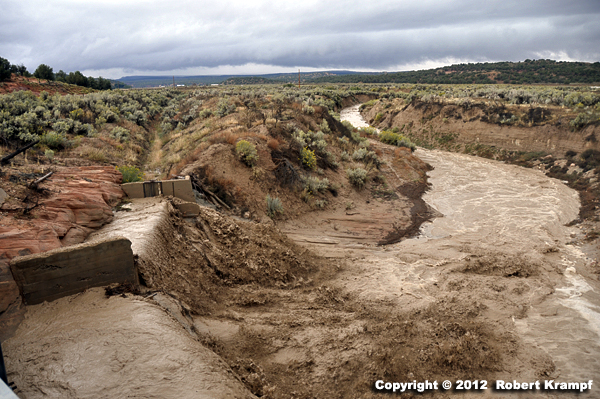
This is Johnson Wash, that runs down the middle of the canyon where we live. It is usually dry, but when it rains up north, we get flash floods. Is this an example of erosion, weathering, both, or neither?
-
Erosion
Yes, the is partially correct! You can tell by the muddy appearance of the water that it is carrying sand, clay and dirt along with it. Erosion is when bits of rock are moved by wind, water, ice, or gravity, so this counts as erosion.. -
Weathering
Yes, the is partially correct! The term "weathering" causes confusion because it sounds like it has something to do with weather. In Earth Science, weathering means "breaking apart." Weathering breaks rocks apart into smaller bits. The fast moving water causes smaller rocks to smash into larger rocks, breaking them apart. -
Both erosion and weathering
Yes! The flash flood in this photo is causing weathering, and erosion. As the flood decreases, and the water slows down, it will drop the sand, clay, dirt, and rocks in a process called deposition. -
Neither erosion nor weathering
No. This flash flood is causing both weathering and erosion.
Click to see which state standards this question tests, and which of my videos, experiments, and other resources support that topic.
Florida
SC.4.E.6.1 Identify the three categories of rocks: igneous, (formed from molten rock); sedimentary (pieces of other rocks and fossilized organisms); and metamorphic (formed from heat and pressure).
| What is a Rock? | video, learnalong, checked |
| Bioclastics: Rocks With No Minerals | video |
| Evaporites | video, learnalong, checked |
| Igneous Rocks and Bubbles | video, free, learnalong, Updated |
| Sedimentary Rocks | video, learnalong |
| Foliated and Unfoliated Rocks | text page, learnalong |
| Identifying Igneous Rocks | text page, learnalong |
| Intrusive and Extrusive Igneous Rocks | text page, learnalong |
| Light and Dark Minerals | text page, learnalong |
| Homemade Fossil Dig | text page |
| Review Rocks-1 | practice |
| Review Rocks-2 | practice |
| Review Rocks-3 | practice |
| Review Rocks-4 | practice |
| Review Rocks-5 | practice |
| Review Rocks-6 | practice |
| Review Rocks-8 | practice |
| Review Rocks-9 | practice |
| Review Rocks-7 | practice |
| Review Rocks-10 | practice |
| Review Rocks-10 | practice |
| Review Rocks-10 | practice |
SC.7.E.6.2 Identify the patterns within the rock cycle and relate them to surface events (weathering and erosion) and sub-surface events (plate tectonics and mountain building).
| Erosion | video, checked |
| Continuous Change | video, checked |
| Bioclastics: Rocks With No Minerals | video |
| Weathering and Erosion | video, learnalong, checked |
| Evaporites | video, learnalong, checked |
| What is a Rock? | video, learnalong, checked |
| The Rock Cycle | video, learnalong |
| Change: Fast and Slow | video |
| Review Rocks-1 | practice |
| Review Erosion-1 | practice |
| Review Erosion-2 | practice |
| Review Erosion-3 | practice |
| Review Erosion-4 | practice |
| Review Erosion-5 | practice |
| Review Rocks-4 | practice |
| Review Rocks-5 | practice |
| Review Rocks-6 | practice |
| Review Rocks-8 | practice |
| Review Rocks-9 | practice |
| Review Rocks-7 | practice |
| Review Rocks-10 | practice |
| Review Rocks-10 | practice |
Utah
UT.4.III.2.b Distinguish between weathering (i.e., wearing down and breaking of rock surfaces) and erosion (i.e., the movement of materials).
| Change: Fast and Slow | video |
| Erosion | video, checked |
| Weathering and Erosion | video, learnalong, checked |
| Review Erosion-4 | practice |
| Review Erosion-5 | practice |
| Review Erosion-1 | practice |
| Review Erosion-2 | practice |
| Review Erosion-3 | practice |
UT.5.II.1.a Identify the objects, processes, or forces that weather and erode Earth’s surface (e.g., ice, plants, animals, abrasion, gravity, water, wind)
| Change: Fast and Slow | video |
| Erosion | video, checked |
| Continuous Change | video, checked |
| Weathering and Erosion | video, learnalong, checked |
| Review Erosion-2 | practice |
| Review Erosion-3 | practice |
| Review Erosion-4 | practice |
| Review Erosion-5 | practice |
| Review Erosion-1 | practice |
UT.8.III.2.b Describe the role of energy in the processes that change rock materials over time.
| Continuous Change | video, checked |
| Weathering and Erosion | video, learnalong, checked |
| Igneous Rocks and Bubbles | video, free, learnalong, Updated |
| Sedimentary Rocks | video, learnalong |
| Change: Fast and Slow | video |
| Erosion | video, checked |
NGSS
4-ESS2-1 Make observations and/or measurements to provide evidence of the effects of weathering or the rate of erosion by water, ice, wind, or vegetation.
| Change: Fast and Slow | video |
| Erosion | video, checked |
| Continuous Change | video, checked |
| Weathering and Erosion | video, learnalong, checked |
| Review Erosion-2 | practice |
| Review Erosion-3 | practice |
| Review Erosion-4 | practice |
| Review Erosion-5 | practice |
| Review Erosion-1 | practice |
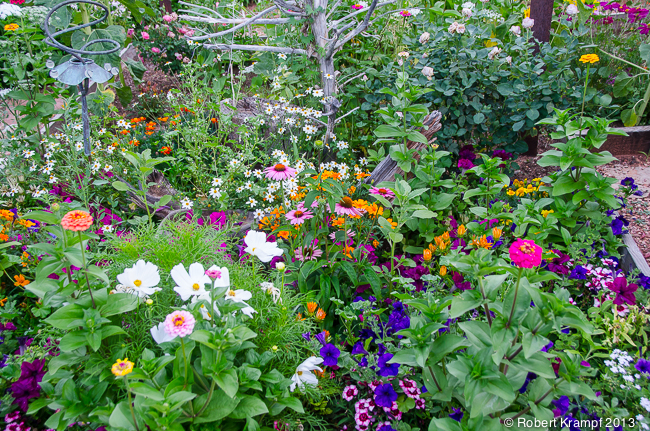
I want to test a new fertilizer, to find the best concentration for my garden. To do this, I plan to divide my garden into four sections.
Section A. I will use 5 grams of fertilizer per gallon each time I fertilize.
Section B. I will use 10 grams of fertilizer per gallon each time I fertilize.
Section C. I will use 15 grams of fertilizer per gallon each time I fertilize.
For section D, how much fertilizer per gallon should I use?
-
20 grams of fertilizer per gallon.
No. This would be a good thing to test, but for this to be a proper science experiment, it is not the correct answer. -
30 grams of fertilizer per gallon.
No. This would be a good thing to test, but for this to be a proper science experiment, it is not the correct answer. -
1 gram of fertilizer per gallon.
No. This would be a good thing to test, but for this to be a proper science experiment, it is not the correct answer. -
No fertilizer at all.
Yes. For this type of experiment, you need to have a control group. That is a group of test subjects that you do not do anything to. If the control group with no fertilizer grows just as well as the other groups, then I would know that the fertilizer was not working.
Click to see which state standards this question tests, and which of my videos, experiments, and other resources support that topic.
Florida
SC.5.N.1.4 Identify a control group and explain its importance in an experiment.
| Bacteria and Antibiotics | video, ClosedCaptions |
| Testing a Leaf for Starch | video, ClosedCaptions |
| Review Scientific Process-1 | practice |
| Review Scientific Process-2 | practice |
| Review Scientific Process-9 | practice |
| Review Scientific Process-11 | practice |
SC.7.N.1.4 Identify test variables (independent variables) and outcome variables (dependent variables) in an experiment.
| Floating Cups | video, checked |
| Testing for Tannic Acid | video |
| Review Scientific Process-1 | practice |
| Review Scientific Process-2 | practice |
| Review Scientific Process-9 | practice |
| Review Scientific Process-11 | practice |
Utah
NGSS
3-5-ETS1-3 Plan and carry out fair tests in which variables are controlled and failure points are considered to identify aspects of a model or prototype that can be improved.
| What is Science? | video, ClosedCaptions |
| Review Scientific Process-1 | practice |
| Review Scientific Process-2 | practice |
| Review Scientific Process-7 | practice |
| Review Scientific Process-9 | practice |
| Review Scientific Process-10 | practice |
| Review Scientific Process-11 | practice |
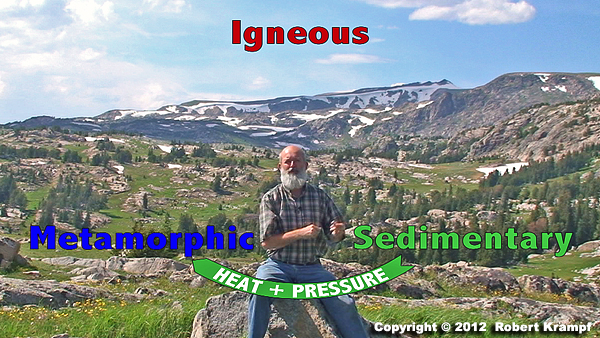
As we look at the rock cycle, we can see that heat and pressure can change a sedimentary rock into a metamorphic rock. What would change a metamorphic rock into a sedimentary rock?
-
More heat and pressure
No. More heat and pressure would cause more metamorphic change. -
Erosion and deposition
Yes. If the rock was eroded and deposited, that would form a sedimentary rock. -
Melting and cooling
No. Melting the rock and then cooling it would produce an igneous rock. -
A metamorphic rock cannot become a sedimentary rock
No. In the rock cycle, a rock from any group (igneous, sedimentary, metamorphic) can be changed into a rock from any group.
Click to see which state standards this question tests, and which of my videos, experiments, and other resources support that topic.
Florida
SC.4.E.6.1 Identify the three categories of rocks: igneous, (formed from molten rock); sedimentary (pieces of other rocks and fossilized organisms); and metamorphic (formed from heat and pressure).
| What is a Rock? | video, learnalong, checked |
| Bioclastics: Rocks With No Minerals | video |
| Evaporites | video, learnalong, checked |
| Igneous Rocks and Bubbles | video, free, learnalong, Updated |
| Sedimentary Rocks | video, learnalong |
| Foliated and Unfoliated Rocks | text page, learnalong |
| Identifying Igneous Rocks | text page, learnalong |
| Intrusive and Extrusive Igneous Rocks | text page, learnalong |
| Light and Dark Minerals | text page, learnalong |
| Homemade Fossil Dig | text page |
| Review Rocks-1 | practice |
| Review Rocks-2 | practice |
| Review Rocks-3 | practice |
| Review Rocks-4 | practice |
| Review Rocks-5 | practice |
| Review Rocks-6 | practice |
| Review Rocks-8 | practice |
| Review Rocks-9 | practice |
| Review Rocks-7 | practice |
| Review Rocks-10 | practice |
| Review Rocks-10 | practice |
| Review Rocks-10 | practice |
SC.7.E.6.2 Identify the patterns within the rock cycle and relate them to surface events (weathering and erosion) and sub-surface events (plate tectonics and mountain building).
| Erosion | video, checked |
| Continuous Change | video, checked |
| Bioclastics: Rocks With No Minerals | video |
| Weathering and Erosion | video, learnalong, checked |
| Evaporites | video, learnalong, checked |
| What is a Rock? | video, learnalong, checked |
| The Rock Cycle | video, learnalong |
| Change: Fast and Slow | video |
| Review Rocks-1 | practice |
| Review Erosion-1 | practice |
| Review Erosion-2 | practice |
| Review Erosion-3 | practice |
| Review Erosion-4 | practice |
| Review Erosion-5 | practice |
| Review Rocks-4 | practice |
| Review Rocks-5 | practice |
| Review Rocks-6 | practice |
| Review Rocks-8 | practice |
| Review Rocks-9 | practice |
| Review Rocks-7 | practice |
| Review Rocks-10 | practice |
| Review Rocks-10 | practice |
Utah
UT.4.III.1.a Describe the differences between minerals and rocks.
| Definition of a Mineral | video, checked |
| What is a Mineral? | video, checked |
| Identifying Minerals | video, learnalong |
| What is a Rock? | video, learnalong, checked |
| Bioclastics: Rocks With No Minerals | video |
| Review Rocks-4 | practice |
| Review Rocks-5 | practice |
| Review Rocks-6 | practice |
| Review Rocks-8 | practice |
| Review Rocks-9 | practice |
| Review Rocks-7 | practice |
| Review Rocks-10 | practice |
| Review Rocks-1 | practice |
NGSS
4-ESS1-1 Identify evidence from patterns in rock formations and fossils in rock layers to support an explanation for changes in a landscape over time.
| Reading the Rocks: Law of Superposition | video |
| Reading the Rocks: Law of Crosscutting | video |
| What is a Rock? | video, learnalong, checked |
| Reading the Rocks: The Present is the Key to the Past | video, ClosedCaptions |
| Paleo Cookies | video |
| Evaporites | video, learnalong, checked |
| Igneous Rocks and Bubbles | video, free, learnalong, Updated |
| Sedimentary Rocks | video, learnalong |
| Homemade Fossil Dig | text page |
| Review Rocks-1 | practice |
| Review Geologic Time-1 | practice |
| Review Rocks-4 | practice |
| Review Geologic Time-2 | practice |
| Review Rocks-5 | practice |
| Review Rocks-6 | practice |
| Review Rocks-8 | practice |
| Review Rocks-9 | practice |
| Review Rocks-7 | practice |
| Review Rocks-10 | practice |
| Review Geologic Time-3 | practice |
MS-ESS2-1 Develop a model to describe the cycling of Earth’s materials and the flow of energy that drives this process.
| Identifying Minerals | video, learnalong |
| Sedimentary Rocks | video, learnalong |
| What is a Rock? | video, learnalong, checked |
| The Rock Cycle | video, learnalong |
| Bioclastics: Rocks With No Minerals | video |
| Evaporites | video, learnalong, checked |
| Definition of a Mineral | video, checked |
| Igneous Rocks and Bubbles | video, free, learnalong, Updated |
| What is a Mineral? | video, checked |
| Light and Dark Minerals | text page, learnalong |
| Review Rocks-1 | practice |
| Review Rocks-2 | practice |
| Review Rocks-3 | practice |
| Review Rocks-4 | practice |
| Review Rocks-5 | practice |
| Review Rocks-6 | practice |
| Review Rocks-8 | practice |
| Review Rocks-9 | practice |
| Review Rocks-7 | practice |
| Review Rocks-10 | practice |
| Review Rocks-10 | practice |
| Review Rocks-10 | practice |
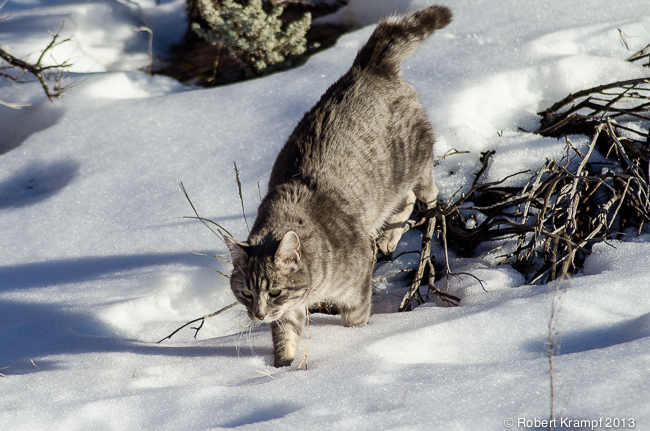
This snow fell when the temperature outside was 39°F. How can you get snow when the temperature is above freezing?
-
The wind made it feel colder, allowing it to snow.
No. While wind chill can make it feel colder, it does not actually make it colder. -
It was colder in the clouds where the snow formed.
Yes. Even when air temperatures at the surface are above freezing, the clouds can be much colder. If the air at the surface is not too warm, the snow can reach the ground without melting. -
Rain froze into snow when it hit the ground.
No. Freezing rain forms ice, not snow. Light, fluffy snow flakes form as they fall through the air, not after they hit the ground. -
This is really hail instead of snow.
No. Hail is made of large chunks of ice, not tiny flakes.
Click to see which state standards this question tests, and which of my videos, experiments, and other resources support that topic.
Florida
SC.5.E.7.4 Distinguish among the various forms of precipitation (rain, snow, sleet, and hail), making connections to the weather in a particular place and time.
| Photographing Snowflakes | video, checked |
| Building a Rain Gauge, part 2 | video, checked |
| Building a Rain Gauge, part 1 | video, checked |
| Snow Rollers | text page |
| Review Weather-6 | practice |
| Review Weather-3 | practice |
SC.6.E.7.3 Describe how global patterns such as the jet stream and ocean currents influence local weather in measurable terms such as temperature, air pressure, wind direction and speed, and humidity and precipitation.
| Nephoscope | video, checked |
| Review Weather-6 | practice |
Utah
UT.4.II.2.a Observe and record effects of air temperature on precipitation (e.g., below freezing results in snow, above freezing results in rain).
| Photographing Snowflakes | video, checked |
| Building a Rain Gauge, part 2 | video, checked |
| Building a Rain Gauge, part 1 | video, checked |
| Review Weather-6 | practice |
| Review Weather-3 | practice |
NGSS
3-ESS2-1 Represent data in tables and graphical displays to describe typical weather conditions expected during a particular season.
| Nephoscope | video, checked |
| Pine Cone Weather | text page, free |
| Review Space-8 | practice |
| Review Weather-5 | practice |
| Review Weather-6 | practice |
| Review Weather-4 | practice |
| Review Weather-3 | practice |
| Review Space-5 | practice |
MS-ESS2-5 Collect data to provide evidence for how the motions and complex interactions of air masses results in changes in weather conditions.
| Cloud Types | video |
| Nephoscope | video, checked |
| Cloud Formation, part 1 | video, ClosedCaptions, checked |
| Pine Cone Weather | text page, free |
| Review Weather-2 | practice |
| Review Weather-6 | practice |
| Review Weather-4 | practice |
| Review Weather-3 | practice |
| Review Weather-1 | practice |
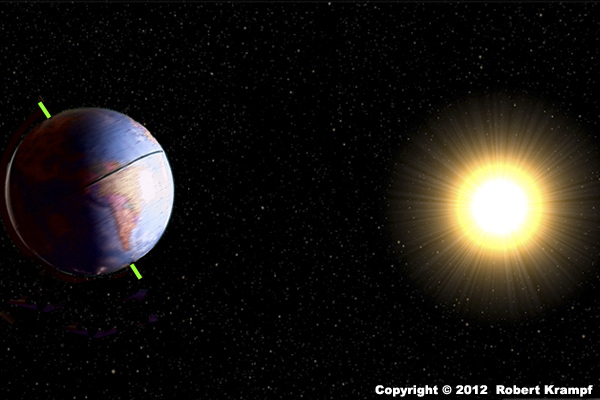
It takes the Earth 24 hours to:
-
Rotate
Yes. The Earth turns on its axis to make one full rotation every 24 hours. -
Revolve
No. It takes a year for the Earth to revolve around the Sun. -
Orbit
No. It takes a year for the Earth to orbit around the Sun. -
Reverse
No. The motion of the Earth does not reverse.
Click to see which state standards this question tests, and which of my videos, experiments, and other resources support that topic.
Florida
SC.4.E.5.3 Recognize that Earth revolves around the Sun in a year and rotates on its axis in a 24-hour day.
| Making a Scale Model of the Solar System | video, ClosedCaptions |
| Global Science | video, ClosedCaptions |
| Finding Your Way | video, checked |
| Review Space-11 | practice |
SC.8.E.5.7 Compare and contrast the properties of objects in the Solar System including the Sun, planets, and moons to those of Earth, such as gravitational force, distance from the Sun, speed, movement, temperature, and atmospheric conditions.
| Making a Scale Model of the Solar System | video, ClosedCaptions |
| Global Science | video, ClosedCaptions |
| Planets and Pennies | video, ClosedCaptions |
| Review Space-4 | practice |
| Review Space-11 | practice |
Utah
UT.3.I.2.a Describe the motions of Earth (i.e., the rotation [spinning] of Earth on its axis, the revolution [orbit] of Earth around the sun).
| Global Science | video, ClosedCaptions |
| Review Space-11 | practice |
UT.6.I.2.a Identify the difference between the motion of an object rotating on its axis and an object revolving in orbit.
| Review Space-11 | practice |